
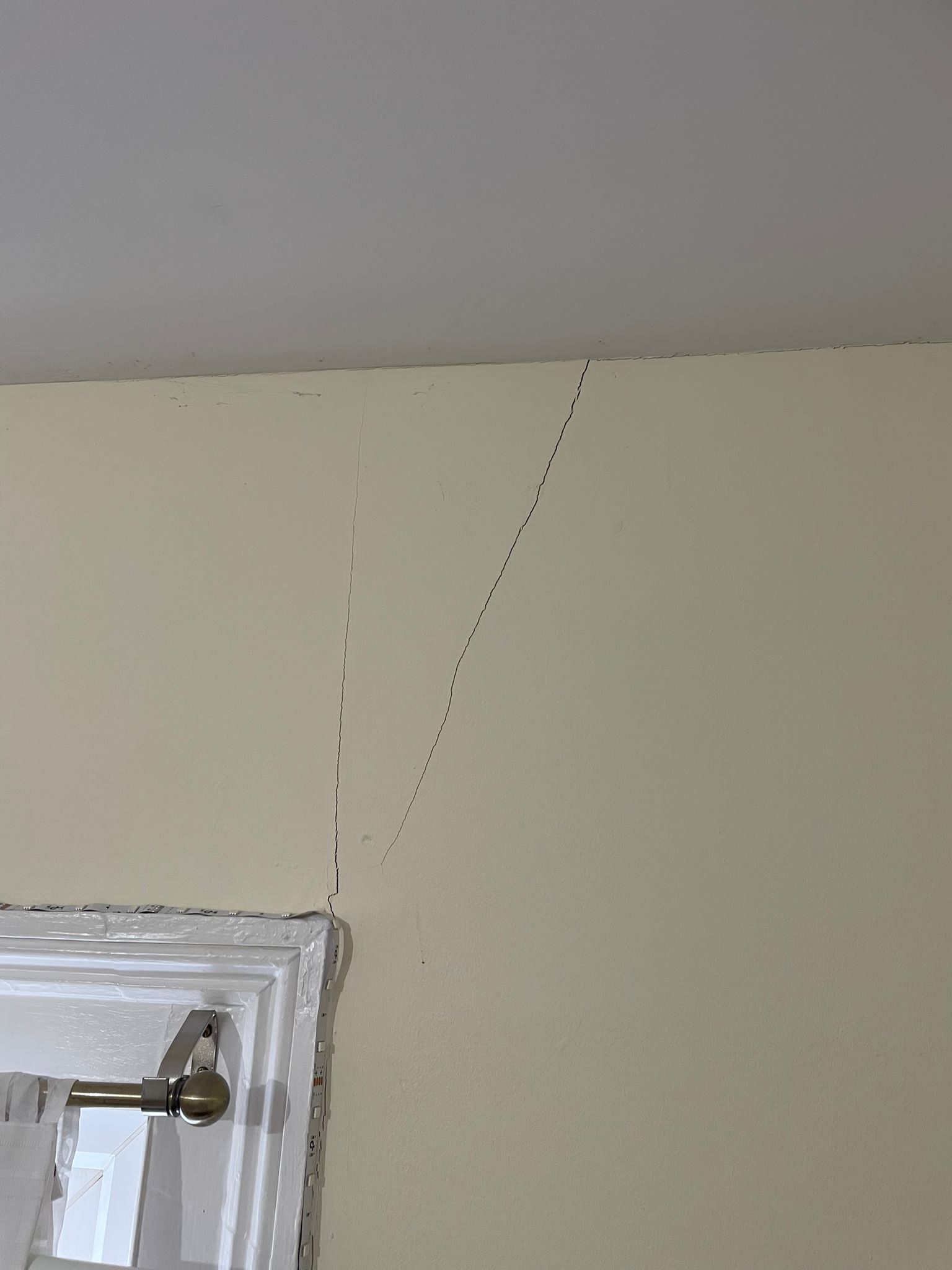
It has long been understood that minor, cosmetic cracks or ones which are historic and non-progressive do not need to be disclosed to an insurer. Not necessarily so any more – beware! Whilst this still holds true with many insurers, there are an increasing number of underwriters that are now asking for any cracks to be disclosed – even minor cosmetic ones – and they probably won’t insure you if you do disclose such cracks – either at inception or at a renewal. They don’t want to have to make a judgement about risk from cracks, so it’s easier just to say “no” if there are any cracks at all.
You need to read the questions posed (and assumptions stated) – either at inception or renewal very carefully and answer correctly (or correct any wrong assumptions) – or you run the risk of your insurance policy being voided from inception when you try to claim. If you see a question or assumption that your property is free from cracking – consider insuring elsewhere instead – there will be other insurers who don’t use such high-risk wordings.
Such insurers are often found on price comparison websites, and you should be very wary of taking out cover with them. See the case (below) or Mrs B v Qmetric for example – where she was initially told that she didn’t need to disclose plaster or render cracks, but later found this to be incorrect and had her policy voided – the insurer’s disgraceful decision even being supported by the Ombudsman!
Many people are uncertain as to whether historic or minor cosmetic cracks need to be disclosed to their insurers. Incidents of insurers using non-disclosure of cracks as an excuse to void the policy (and hence avoid paying a claim) are on the rise. The Financial Ombudsman Service (FOS) site has many examples of decisions it has made in connection with such matters, and consistently supports insurers in voiding a policy from inception (start date) if the insurer can prove that a policyholder’s non-disclosure of material facts, such as cracks, was deliberate, reckless, or even careless, and would have resulted in the insurer declining cover entirely.
Key FOS Decisions and Principles
The FOS assesses these cases under the Consumer Insurance (Disclosure and Representations) Act 2012 (CIDRA), which requires consumers to take “reasonable care” not to make a misrepresentation when arranging insurance. This means ensuring that all answers given to insurers’ questions (at inception and at every renewal) are true. For commercial policies, the onus on the policyholder is greater – they are required to volunteer any information which is considered to be “material” as well as just answer questions truthfully. “Material” is undefined, so arguments as to whether a fact was material or not are common. This is not the case with non-commercial insurance though.
- Insurer Action Depends on Culpability: The action an insurer can take depends on the nature of the non-disclosure:
- Deliberate or Reckless: The insurer can void the policy from the start and keep the premiums paid.
- Careless: The insurer can still void the policy if they can demonstrate they would not have offered cover at all, but they typically must refund the premiums.
- Materiality: Cracks are considered material facts because they directly influence the insurer’s assessment and acceptance of the risk. Insurers often have specific questions about past or current cracks, and failing to disclose known, visible cracks is often viewed as a failure to take reasonable care – whether they are subsidence cracks or not.
- Case Evidence (click on hyperlink for full case text):
- “Good state of repair”. A FOS decision in 2022 (DRN-3363529) upheld an insurer’s decision to void a policy where reports indicated cracks had been present before the policy started, and the applicant had stated the property was in a “good state of repair”. The policyholder had thought that minimal cracks present were unimportant surface cracks which didn’t detract from the building’s “good state of repair”. FOS found the misrepresentation to be reckless and the avoidance of the policy reasonable. They considered that even minimal surface cracks would have rendered the building not in a good state of repair.
- The insurer’s question was “Is the property free from cracking?” Applicant answered “yes” as they assumed historical internal cracking was due to the age of the plaster, and lack of redecoration. Upon later claiming for subsidence, the Insurer said that this answer was inaccurate, so voided the policy from inception – voiding of policy upheld by FOS (DRN-4887722)
- FOS decision DRN-5749924 (2025); The insurer’s question (at a renewal several years after policy inception) was “Within the last 10 years, has your property shown signs of cracking on the internal or external surface of an outside wall or party wall, whether this has been repaired or not?” The applicant answered “no”, as they had been told by their surveyor that cracking present when they purchased was historic and non-progressive. The insurer voided the policy on the basis that this answer was untrue, but that decision was not supported by FOS. The FOS held that the insurer’s renewal question implied ongoing or developing cracking in the last 10 years – not historic and non-progressive cracking.
It is not uncommon for the wording of a question / assumption at renewal to be different from that asked at inception – beware. Just because you answered correctly at inception does not mean that the same answer is still appropriate at renewal. Many insurers are tightening up on subsidence underwriting now, as the cost of subsidence is crippling to the insurance industry. They are looking even harder for ways to avoid paying claims, and some are not offering cover at all to any property with any cracks, or any subsidence history.
2022 Price Comparison Website case (Mrs B v Qmetric Group Ltd – DRN-3660009);
This was a claim for storm damage to roof tiles. The FOS upheld the insurer’s decision to void the policy due to non-disclosure of what appears to have been a cosmetic external render crack.
Mrs B had been aware when she bought the house that there was a crack in the outside render, but knew that this was cosmetic, and didn’t affect the brickwork – just the external render coating. No concerns had been raised about it in her survey. She sought insurance quotes through a price comparison website, which provided a form for her completion before they could proceed to get automatic quotes from their member insurers. One question on the form was;
“Has your townhouse ever had cracks in its external walls? We only need to know if cracks have affected the main structure of your wall. You don’t need to tell us about minor cracks that have affected the render or plaster only”
She correctly answered ‘no’ as she knew that they were not asking her to disclose minor render cracks such as hers.
Her answers on the form were automatically imported into the various insurers’ website questionnaires in order to produce competitive quotes and she clicked through to proceed with the quote from Qmetric. She was then taken through to Qmetric’s web page and found they had stated a list of assumptions based on the answers she had already provided on the price comparison website. She was invited to check and make sure these were correct before proceeding. She accepted the quote and took out the insurance.
When a loss adjuster came round to look at the storm damage to her roof a few years later, he noticed the render crack and asked her when she became aware of it – clearly looking to provide the insurer with an excuse to avoid paying the claim (as was his duty as a loss adjuster to do). She confirmed the render crack was there when she bought the house, but was not flagged up as a concern in her survey.
Upon receipt of the loss adjuster’s report, the insurer voided the policy from inception, based on the fact that Mrs B had not sought to correct their stated assumption that;
“It [your property] does not show signs of cracking in external walls”
Why they made such a misleading assumption is open to question. They must have known that the price comparison site they had subscribed to specifically stated that plaster and render cracks were not to be disclosed, so any answer given to that question would probably be wrong for their particular underwriting criteria (given that most houses do in fact have minor cosmetic cracks here and there). Perhaps they should not have been using the price comparison site if the answers given on it would be unsafe for them to import?
It is not clear whether Mrs B realised that the insurer’s assumption had subtly different wording, or what they meant by “external walls” (i.e. did that include the non-structural render finish or just the structural masonry behind?). After all, the price comparison site (when referring to the “external walls”) had clearly considered the “main structure” as separate from plaster or render finishes. It would seem reasonable if Mrs B had assumed that Qmetric’s understanding of “external walls” would align with that of the price comparison site they were using – and drawing assumptions from.
After inception, the policy was later renewed several times before the storm damage claim, and one of the renewal questions was;
“Within the last 10 years, has your property shown signs of cracking on the internal or external surface of an outside wall or party wall, whether this has been repaired or not?”
Again, Qmetric had assumed a “no” answer based on her previous given answers to similar questions at inception and previous renewals. She did not seek to change it – nothing had changed about this crack since she purchased the property.
When voiding the policy from inception – Qmetric alleged that she should have told them about the render crack (at inception), and had she done so they would not have given a quotation at all. It mattered not that the crack might only be in the render. Their criteria was different to the price comparison site’s, which she should have realised and changed the automatic assumption they had made. They further added that at subsequent renewals she should have altered the auto-assumed statement of facts and had she done so they would have declined to renew.
Sadly, the FOS supported the insurer’s decision and Mrs B’s claim was denied and she left uninsured. The Ombudsman said that “It [your property] does not show signs of cracking in external walls?” was clear and unambiguous – and covered any cracking, not just cracking which Mrs B might think cause for concern. They were also persuaded that Qmetric would not have quoted if they knew a property had any cracking at all.
What to do
Not all insurers behave in this way, but more and more are doing so now, and are commonly (but not always) being supported by the FOS. The lesson is that the precise wording of an insurer’s questions and stated assumptions (at inception and again at every renewal) is very important to read fully and understand, and if there is any ambiguity you should err on the side of caution and disclose cracking – whether you believe it to be structural or cosmetic. Look out for high-risk questions like “has your property got any cracks”. Rather than proceed with such an insurer, maybe look elsewhere instead – many of the more responsible insurers will specifically say that they only want you to disclose structural ones (or words to that effect). Many insurers will still offer you subsidence cover if you also give them an expert’s report confirming that the cracking is not subsidence – though some (like the insurer in the above case) won’t.
Beware taking out insurance with any company whose policy is to reject offering cover at all to properties which have any sort of cracking. Cracks happen for many insignificant non-structural reasons all the time, so even if you have no cracks when you take out the policy, if a minor cosmetic thermal crack were to appear and you were to disclose that at renewal, then you may well have to change insurance provider. If you didn’t disclose it at renewal then you would be at risk of your policy being voided when you come to claim for something – possibly wasting all the money you had paid in premiums over the years. It would be good practice to establish (in writing) with your insurer what their policy is about insuring properties with cracks. If they say they will insure such properties (providing the cracks are non-structural for example) then they cannot later void your policy for non-disclosure of such cracks. You should also check at every renewal that this is still their policy – as insurers are changing their underwriting criteria about subsidence all the time.
Bob Gibson – Subsidence Consultant