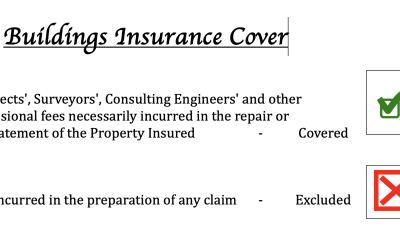
Despite what you may have been led to believe, it is possible to reclaim professional fees incurred from your own appointed subsidence expert (be that a structural engineer, building surveyor or other relevant professional) under your buildings insurance. ...
Double-counting subsidence claims – and the effect that has on policy premiums
The scenario of clay-shrinkage subsidence returning a few years after it has been (supposedly adequately) mitigated and repaired is unfortunately all too common. This is usually because inadequate tree management had been carried out in the first place and roots have...
Should I disclose that minor plaster crack to my buildings insurer?
It has long been understood that minor, cosmetic cracks or ones which are historic and non-progressive do not need to be disclosed to an insurer. Not necessarily so any more - beware! Whilst this still holds true with many insurers, there are an increasing number of...
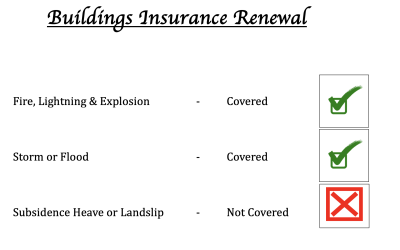
My Insurer has withdrawn subsidence cover – help!
What to do if your insurer withdraws subsidence cover – and how to avoid that
Ground-Shifting Changes in How We Tackle Subsidence
The UK’s clay subsidence industry was born in the 1970s, matured in the 1980s and fuelled by global-warming has since grown to become a huge behemoth which already costs the insurance industry millions every year – predicted by PwC to increase by 800% and cost £1.9 billion per year in the not too distant future, if climate change continues.
Something has to change soon – and it can;
Crack Diagnosis – cracks tell a story
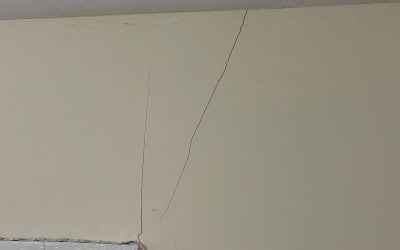
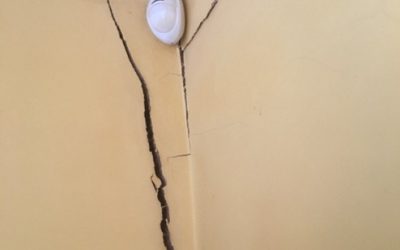
The diagnostic art of identifying different types of building movement from crack patters is a skill which takes many years of practical experience to learn properly. I have heard many cases where clients have been told by tradesmen visiting the house, or over the...
UK Geology – and root-induced subsidence (part 2 – Mudstone)
Root-induced subsidence occurs in shrinkable soils, which are mainly clays, or clay-based matrixes. In the UK there are a great deal of different soil types, and layers of differing soils. We need to differentiate between bedrock (i.e. the main older ground type...
Clay Subsidence; Building standards & defective (or inadequate) design (or construction)
In the UK we have rigorous standards for construction. The Building Research Establishment first published guidance for building near trees on clay soils in 1949 – then just an approximate rule of thumb that houses should not be sited closer to a tree than its mature...
Who should I use to handle my subsidence problem?
Insurer-employed vs independent subsidence consultants When you have subsidence, it needs to be handled carefully and properly, by an experienced consultant. Adequate and appropriate investigations need to be undertaken not only to correctly diagnose the precise...
UK Geology – and root-induced subsidence (part 1 – London clay)
Root-induced subsidence occurs in shrinkable soils, which are mainly clays, or clay-based matrixes. In the UK there are a great deal of different soil types, and layers of differing soils. We need to differentiate between bedrock (i.e. the main older ground type...