
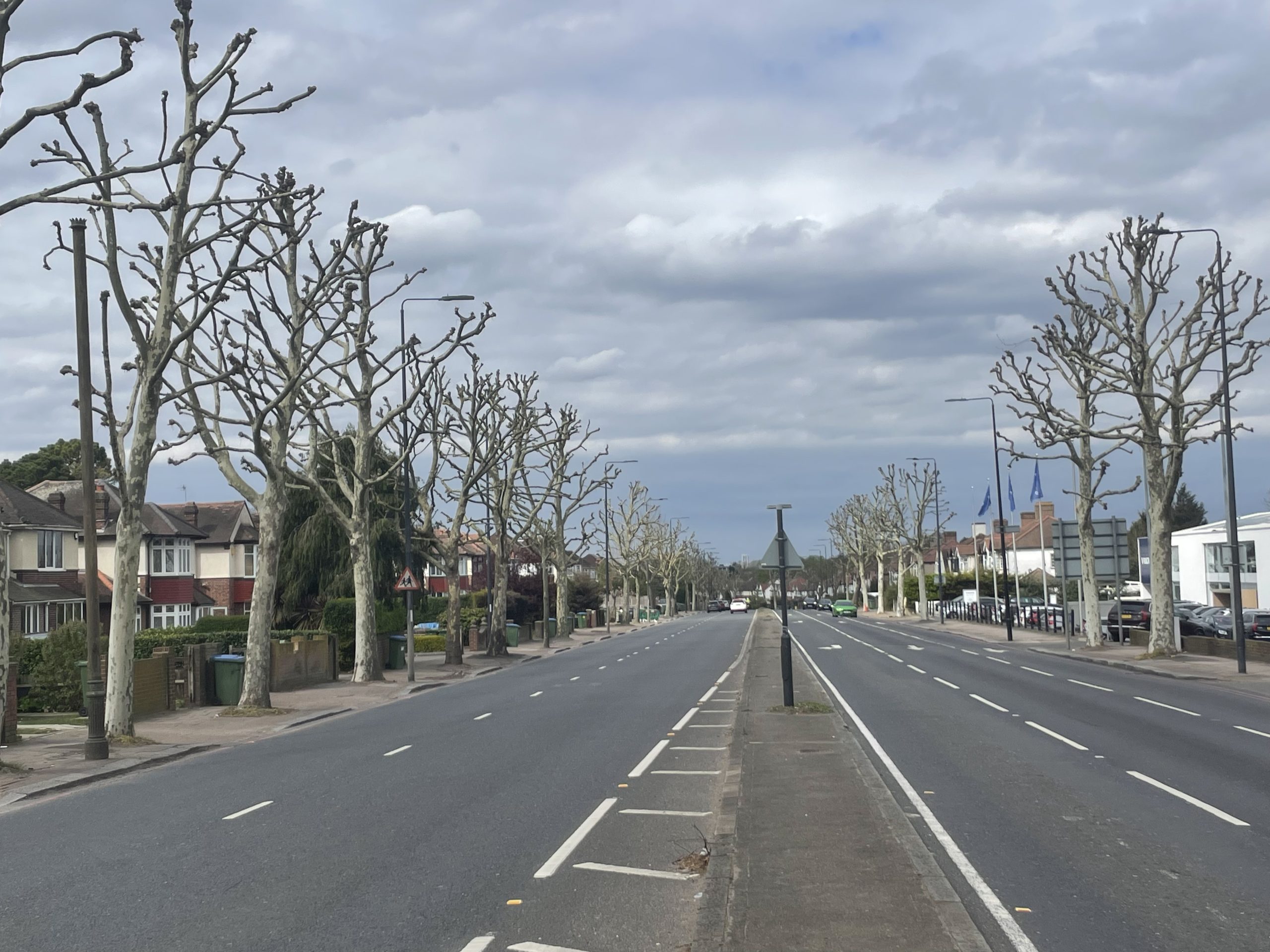
I feel sure that this is a more common sight this year than it used to be – long rows of street trees with significantly reduced crowns. I think that councils are carrying out more crown reduction work now as a direct consequence to climate change and increased subsidence risk in clay areas.
The perceived thinking is that a 30-50% crown reduction equates to a 70-90% foliar reduction and reduces water uptake effectively. Some trees suffer in heatwaves and crown reduction can make them more resilient to drought damage as well as less likely to cause subsidence to nearby buildings. Also, a judiciously implemented sensibly designed tree maintenance regime can keep a council free from liability to nearby home owners even if subsidence does occur.
Such maintenance can and does often work in preventing street trees causing subsidence to nearby houses, but sometimes despite best efforts the roots grown beneath the house and cause enough clay shrinkage for cracks to occur. When this has happened, further tree management invariably doesn’t work in resolving the issue – see article by respected tree expert Martin Dobson; “Is pruning an effective tool for mitigating subsidence damage?” in which he concludes that;
– Pruning can be used as a reasonable way of minimising risk and preventing first instance of subsidence: (30% linear crown reduction every two years).
– Once subsidence damage has occurred pruning is not a consistently reliable means of mitigation.
– However, if pruning rather than felling is desirable then 40 – 50% linear crown reduction is required.
The 2025 Joint Mitigation Protocol (a good practice document produced by the combined efforts of the insurance sector and local authorities) advises that where tree removal is deemed inappropriate or undesirable (usually the case with street trees) a 30-50% crown reduction should be carried out within 13 weeks of agreement being reached that the tree was the cause.
It does not say, however, what should be done if such a pruning regime fails to resolve the problem. It advises that if agreement cannot be reached then mediation should be attempted before litigation. Removal of particular identified trees, or an effective root barrier, or underpinning the building are often then the only ways of stopping the subsidence permanently.
Bob Gibson – Subsidence Consultant